Speed
Moving fast can hide the fact that people still don’t know how the work should change.


Available now
How Leaders Build Trust, Value, and Durable Capability in the Age of AI
Artificial intelligence may be moving fast. Most organizations and people aren’t ready to absorb it at the same speed.
Companies are investing in tools, launching pilots, and expecting quick productivity gains. But a successful pilot isn’t sustained value. And moving faster doesn’t help if people don’t understand the tool, trust the output, or know how their work needs to change.
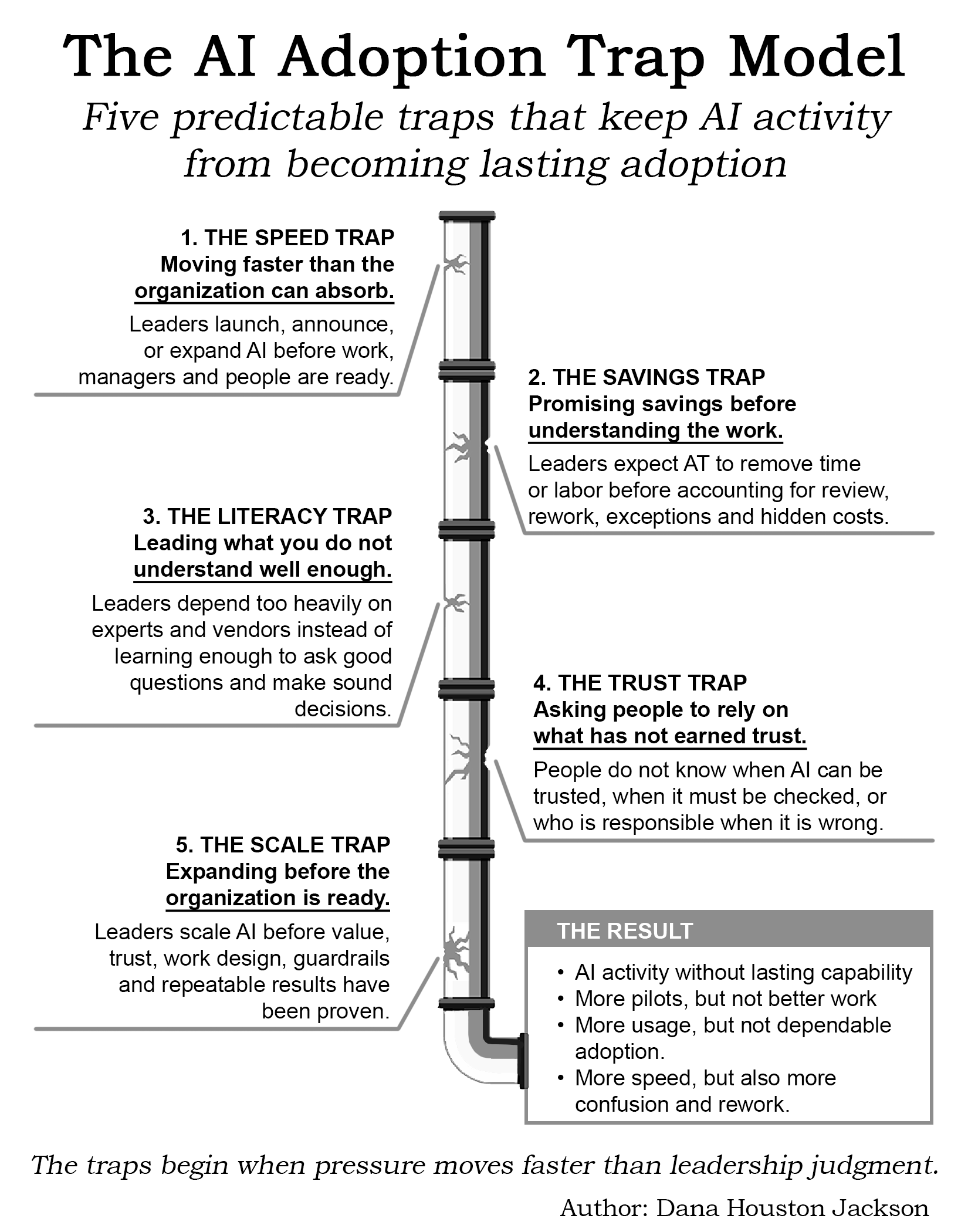
The AI Adoption Traps examines five common traps that make AI progress look stronger than it really is: speed, savings, literacy, trust, and scale.
The five traps
Moving fast can hide the fact that people still don’t know how the work should change.
Cost narratives can outrun the harder question: is the work actually improving?
Knowing about AI is not the same as knowing how to use it responsibly in real work.
Without trust — or with blind reliance — adoption stalls or becomes dangerous.
Scaling a pilot that never became real work only multiplies the gap.
Frameworks from the book

Implementation and adoption are not the same thing. The Adoption Gap is the space between making a new solution available and seeing meaningful, sustained changes in work and performance.
Closing that gap requires more than communication and training. It requires trust, work redesign, leadership behavior, feedback, learning, and evidence that the new approach actually produces value.
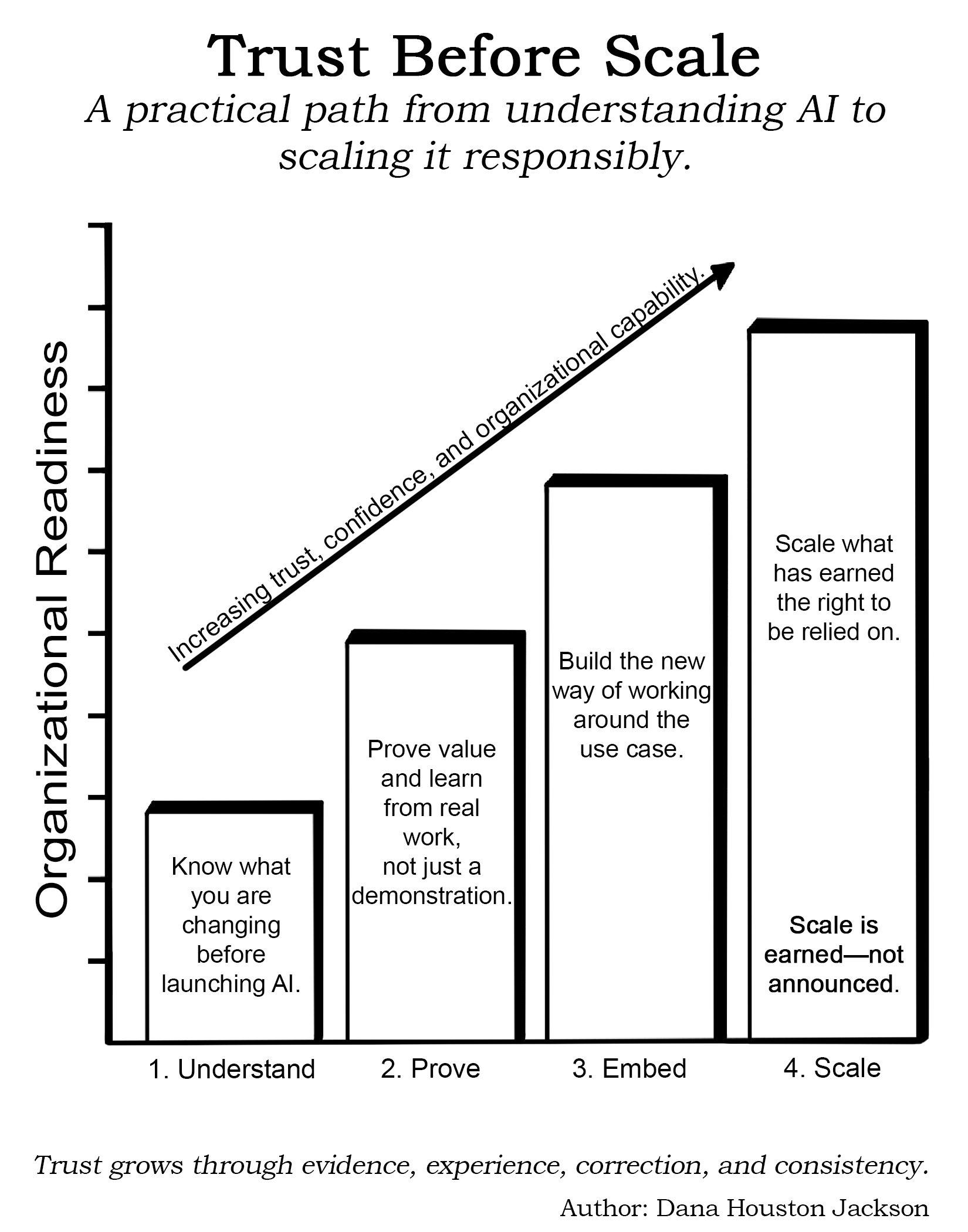
Organizations often ask people to trust a technology because leadership has already decided to scale it. That reverses the sequence.
Trust should be built through experience, transparency, appropriate safeguards, useful outcomes, and visible human accountability. Then scale what has earned the right to scale.
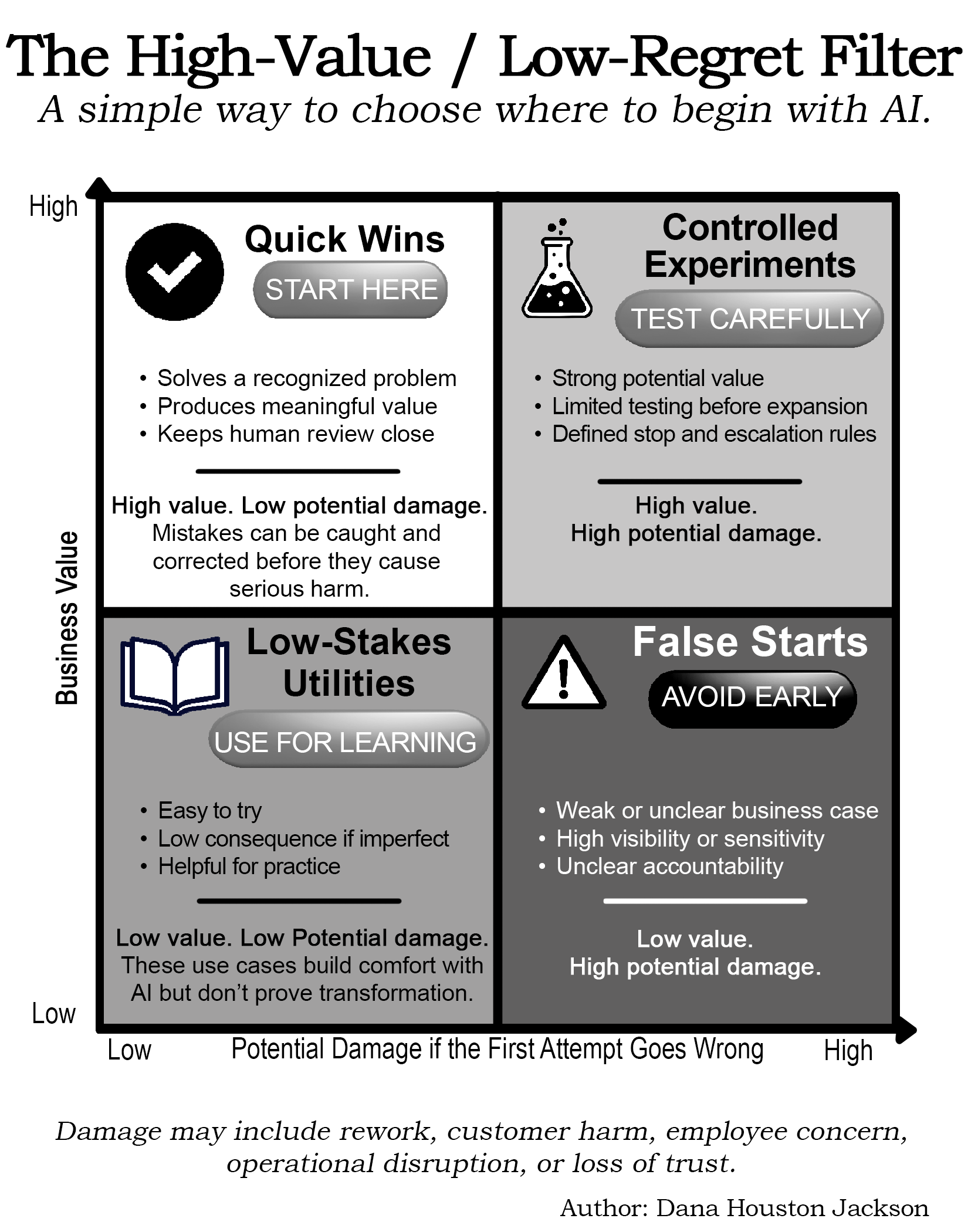
Not every possible AI use case is a good place to start. Early adoption should focus on opportunities where people can experience meaningful benefit while the consequences of an imperfect experiment remain manageable.
That creates learning, confidence, evidence, and trust before the organization moves into higher-risk applications.
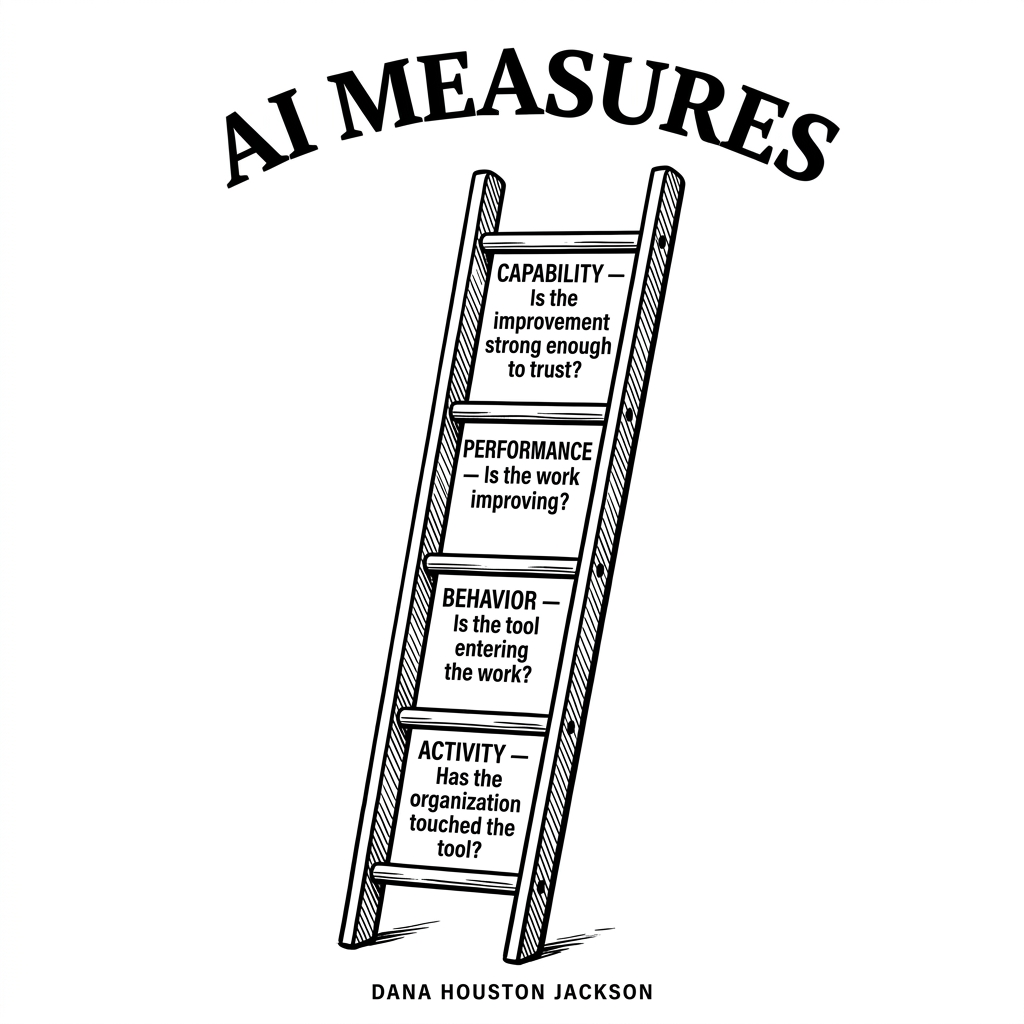
Activity is not the same as adoption. A stronger view of adoption looks at evidence across four levels:
A practical guide

Who it’s for
This book is for executives, enterprise change leaders, project managers, technology teams, change and adoption professionals, and anyone responsible for helping an organization turn AI investment into responsible, repeatable value.

Bonus resources
Downloadable companion content for leaders who want more to work with.
Coming with page launch
Content Dana cut from the manuscript so the book stayed sharp — available here as a downloadable resource.
Keynotes, executive briefings, workshops, and advisory support based on The AI Adoption Traps.

About the author
Author. Speaker. Advisor. Executive and life coach. Organizational change and AI enterprise change doer. Dana has more than 30 years of experience helping organizations make complex change work in the real world.
She is the founder of Change With a Coach Approach, LLC and Managing Director of AI Adoption Acceleration at itD Tech. Her work brings together organizational change, project leadership, adaptive leadership, and practical experience across complex industries.
She wrote The AI Adoption Traps after watching smart organizations repeatedly invest in capable technology while underestimating the work required to help people use it well.
Order the book
Learn where the traps are before your organization steps into them.
Available now on Amazon and Lulu.
Dana is available for keynotes, executive briefings, workshops, and organizational advisory support based on the book.
Next
Start with the book — or bring Dana into the work your organization is already doing.