The AI Adoption Traps
Why smart organizations scale the wrong assumptions.
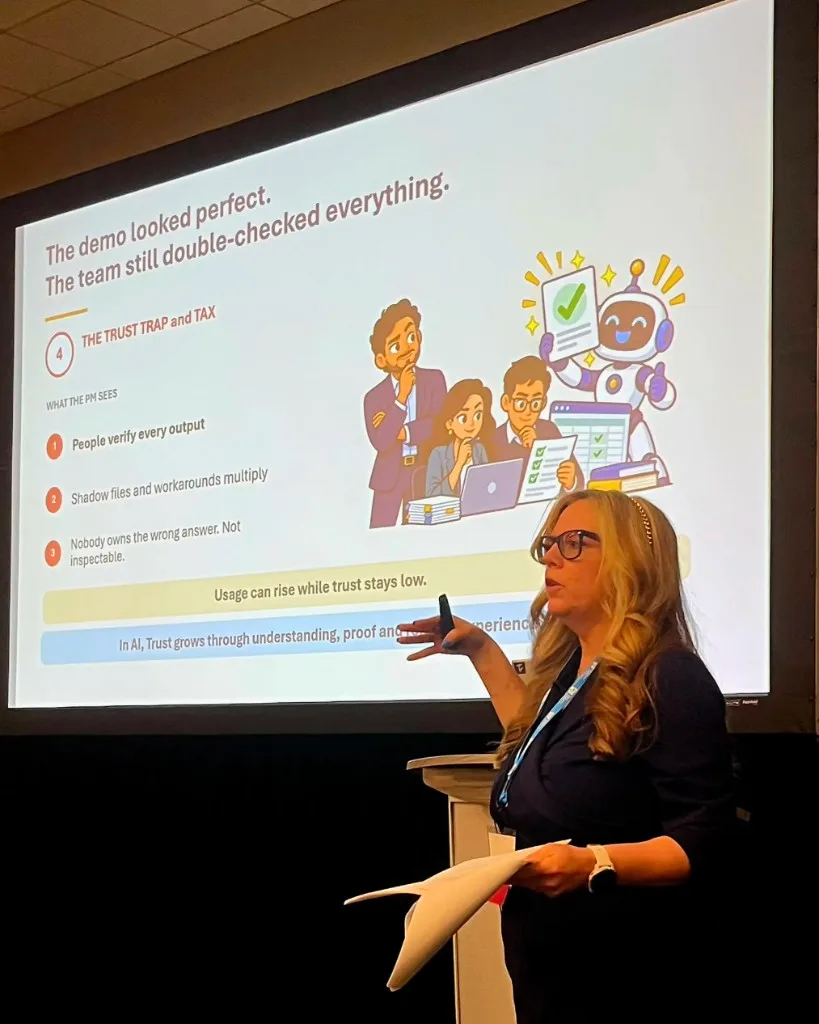
Organizations are racing to deploy AI. But speed without trust, work redesign, leadership understanding, and evidence can create more activity without creating more value.
This session explores the traps leaders encounter when they confuse deployment with adoption—and what it takes to build responsible, measurable AI capability.
Audiences leave thinking differently about trust, use-case selection, human accountability, work redesign, adoption measurement, and scaling.
Trust Before Scale
AI adoption moves at the speed of justified trust.
Employees are being asked to use technologies many leaders do not fully understand themselves. Some people overtrust AI. Others avoid it. Both create risk.
This session explores how leaders build the conditions for appropriate trust through transparency, experience, safeguards, human accountability, and useful work.
Leading a 5 Generation Workforce
Five generations don’t require five leadership styles.
Generational labels make interesting headlines. They are less useful as management systems.
This session moves beyond stereotypes and looks at the real leadership challenge: creating workplaces where people with very different experiences, expectations, career stages, and relationships with technology can contribute together.
Why Change Fails Quality
A strong solution still fails if adoption was never designed.
Quality teams bring rigor to root cause analysis, process design, documentation, and validation. But the handoff into daily work often gets far less discipline.
This session explores the hidden system problems behind poor adoption—and how ownership, reinforcement, role clarity, and verification determine whether corrective actions create durable change or quietly collapse after closure.
Engineering a Change Mindset
Growth changes the operating system—even when the organization wants everything else to stay the same.
AEC, Engineering and technical organizations often succeed because of local judgment, responsiveness, technical quality, and strong client relationships. But as complexity grows, the same operating habits that once created speed can begin creating coordination drag, slower decisions, and change fatigue.
This session helps leaders recognize those patterns and apply adaptive leadership practices that protect what already works while building greater capacity to change, scale, and respond under uncertainty.
From Rollout to Capability
Implementation is not adoption.
Organizations celebrate go-live. Employees experience what happens next.
This session examines the gap between delivering a solution and creating sustainable organizational capability. It challenges familiar adoption measures and introduces a more useful way to think about activity, behavior, performance, and capability.
Change Management Isn’t Dead. But It Isn’t Change Leadership.
Traditional Change Management still has useful tools. But communication, training, stakeholder plans, and resistance mitigation cannot compensate for decisions made without sufficient participation or changes designed without enough understanding of the work.
This session explores what leaders—not Change Managers—must own when organizations need to adapt continuously.
Better Questions Before Bigger Solutions
I have spent enough time inside major organizational change to be suspicious of easy answers. This session starts with understanding what is actually happening—and the questions that should come before the next big solution.